

A witness is giving evidence in an Employment Tribunal. They are being cross-examined about a conversation that could determine the outcome of the case, and a difficult question is put to them.
They pause.
Nothing particularly unusual about that. Except this time, the pause is not because they are trying to remember what happened. A connected device is feeding them information. Perhaps it is a message from someone outside the hearing or perhaps AI is searching thousands of pages of evidence and suggesting how they should respond.
The Employment Judge thinks they are hearing the witness’s answer.
They may not be.
This scenario might sound like something from the future, but a recent High Court case has shown that the underlying risk is already here.
Technology has transformed the way employment disputes are conducted. Electronic bundles, remote hearings, Teams and WhatsApp evidence and, increasingly, artificial intelligence are now part of the litigation landscape.
For the most part, these developments have made it easier to organise evidence and participate in proceedings. However, a recent High Court decision raises a rather different question: what happens when technology begins to interfere with the evidence itself?
The case of UAB Business Enterprise & Anor v Oneta Ltd & Ors [2026] EWHC 543 (Ch) was not an employment dispute.
It concerned a complicated commercial disagreement involving company ownership, investments and the authenticity of various agreements. For employment lawyers, however, one particular episode during the trial is difficult to ignore.
A witness was discovered wearing smart glasses while being cross-examined. The Court ultimately concluded that the glasses had been connected to his mobile telephone and that he had been receiving assistance or coaching with his answers.
It is an unusual set of facts, but the principle behind them has much wider significance. Employment Tribunal litigation frequently turns on oral evidence and credibility.
As wearable technology becomes more sophisticated and AI becomes capable of analysing and responding to information almost instantaneously, Tribunals may increasingly need to consider not only what a witness is saying, but whether the answer being given is genuinely theirs.
What happened in the case?
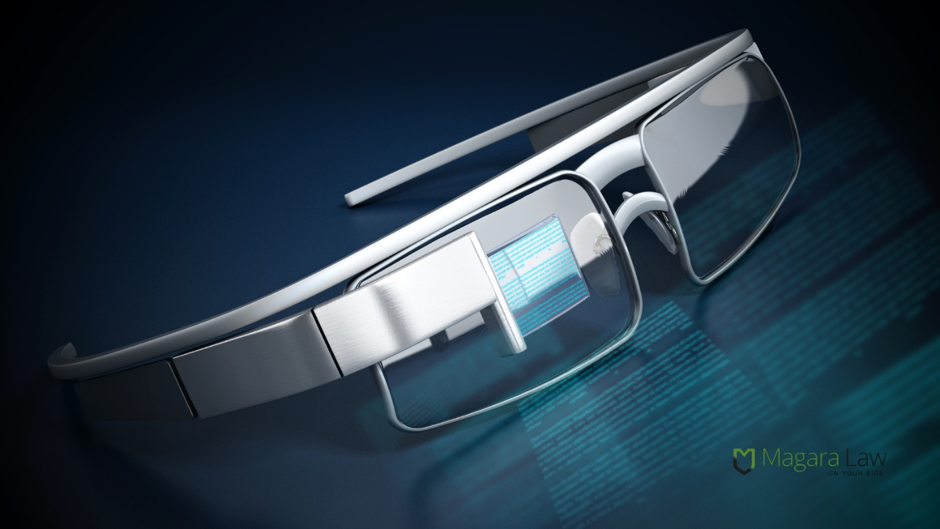
During cross-examination, the witness was giving evidence through an interpreter and appeared to pause before answering a number of questions.
Counsel heard interference coming from around him and asked whether he could remove his glasses because of the possibility that they were smart glasses. The interpreter sitting alongside him also confirmed that she could hear the interference.
It subsequently became apparent that the witness was indeed wearing smart glasses. The Judge directed him to remove them and, shortly afterwards, his mobile telephone began broadcasting the voice of another person.
The telephone and glasses were removed from him and placed into the possession of his solicitor. When the glasses were subsequently inspected, they connected to the telephone when switched on.
The witness denied using the glasses to receive answers. The Court did not accept his explanation. The Judge concluded that the smart glasses were connected to his telephone during cross-examination and that the witness had been assisted or coached in answering questions until the arrangement was discovered.
That finding had significant consequences for his credibility. The Judge regarded the witness as untruthful and unreliable and also expressed wider concerns about his written evidence. His witness statements contained arguments, opinions and submissions, and the Court was not satisfied that parts of the statements genuinely represented his own evidence.
For Employment Tribunal practitioners, there are two related issues here: preserving the integrity of oral evidence and ensuring that written witness evidence genuinely belongs to the witness.
Why does this matter in Employment Tribunal litigation?

Employment Tribunal cases can be particularly dependent upon witness evidence because the real dispute is often not simply about what happened, but why it happened.
In an unfair dismissal claim, there may be a dispute about what the employer genuinely believed when deciding to dismiss. In discrimination proceedings, the Tribunal may need to determine whether a protected characteristic consciously or subconsciously influenced a decision.
In whistleblowing cases, the evidence may turn on who knew about a protected disclosure and whether that knowledge influenced subsequent treatment. In harassment cases, there may simply be two very different accounts of what was said during a conversation for which there is no contemporaneous record.
The documentary evidence is obviously important, but it rarely answers every question. Employment Judges regularly have to assess witnesses against the contemporaneous documents, the inherent probability of their account and the evidence given under cross-examination.
That is why the integrity of cross-examination matters.
A witness statement will usually have been prepared over a period of time, with access to documents and assistance from their legal representatives. Cross-examination is different. It allows the opposing advocate to test that evidence, explore inconsistencies and put questions that the witness may not have anticipated.
If a witness is receiving assistance while answering those questions, the Tribunal is no longer testing the witness’s evidence in the conventional sense. It may instead be testing an answer formulated by somebody outside the witness box.
The risk goes considerably further than smart glasses

It would be easy to regard this as an extraordinary case involving a relatively unusual gadget. That would, in my view, miss the wider issue.
Smart glasses are simply one example of an increasingly sophisticated range of connected devices.
Smart watches, wireless earbuds and other wearable technology can receive information discreetly. Some devices can record or transmit what is happening around them. As that technology becomes integrated with increasingly capable AI systems, the potential challenge becomes more significant.
Consider how quickly generative AI has developed. We already have systems capable of analysing substantial quantities of text, identifying inconsistencies, summarising documents, and generating suggested responses within seconds.
It is therefore not particularly difficult to envisage technology capable of listening to a question being asked in cross-examination, interrogating documents, and suggesting an answer to the witness almost immediately.
In an Employment Tribunal involving a bundle running to several thousand pages, that could theoretically allow a witness to receive prompts identifying an email from three years earlier, an inconsistency in another witness’s statement or a suggested explanation for a difficult document.
The concern is therefore not simply about somebody secretly telephoning a witness. The more difficult question for the justice system is how we preserve genuinely independent oral evidence when technology capable of assisting a witness becomes increasingly powerful, portable and difficult to detect.
Remote hearings create an additional challenge

This issue is particularly relevant to Employment Tribunals because remote and hybrid hearings have become a familiar part of the system. Remote hearings can offer substantial advantages, including greater accessibility, reduced travelling time and cost, and more flexible case management. Those benefits should not be overlooked.
However, a remote hearing gives the Tribunal less control over the physical environment in which a witness is giving evidence.
In a Tribunal room, an Employment Judge and the representatives can ordinarily see the witness, the desk in front of them and much of their immediate surroundings. When evidence is given through a webcam, the Tribunal sees only what the camera shows.
Another monitor could sit outside the camera’s field of vision. Messages could appear on a separate device. Somebody else could potentially be elsewhere in the room. A smart watch, earbud or pair of connected glasses might not immediately attract attention.
This does not mean that remote witnesses should automatically be treated with suspicion. The overwhelming majority will undoubtedly comply with their obligations. The issue is instead whether procedural safeguards designed when these technologies either did not exist or were considerably less capable remain sufficient.
As the technology develops, Employment Tribunals may have to become more technologically aware when managing oral evidence.
Do hearing protocols need to change?

One practical consequence may be that Courts and Tribunals need to deal expressly with connected devices before a witness begins giving evidence.
Witnesses are already expected not to communicate with others while under oath or affirmation, and particular care is normally taken where evidence continues across an adjournment. However, the technological environment may justify more explicit directions.
For example, a Tribunal could ask a witness to confirm that their mobile telephone has been switched off and placed away from them; that they are not wearing connected glasses, earbuds or a smart watch capable of receiving communications; and that no other communication platform is operating while they give evidence.
For remote witnesses, there may be circumstances where the Tribunal considers it appropriate to establish who else is in the room or what devices are being used.
Such precautions may currently seem somewhat excessive for an ordinary Employment Tribunal hearing. However, procedural safeguards often evolve in response to technological change.
Ten years ago, few employment practitioners would have anticipated the volume of WhatsApp, Teams and social-media evidence now routinely appearing in Tribunal bundles. The same may prove true of wearable technology and AI.
The objective should not be to prohibit useful technology unnecessarily. It should simply be to preserve a basic feature of our justice system: when a witness answers a question, the Tribunal should be confident that it is hearing that witness’s answer.
There is an equally important lesson about witness statements
The judgment also provides a useful reminder about the preparation of written evidence. The Judge was critical of witness statements that contained substantial argument, opinion, and submissions and ultimately questioned whether parts of the statements genuinely reflected the witness’s own evidence.
This is particularly relevant as lawyers and litigants make greater use of generative AI when preparing documents.
A witness statement is not supposed to be a skeleton argument written in the first person. Legal representatives obviously have an important role in helping witnesses organise what can sometimes be years of complicated events into a coherent statement. However, the factual account must remain the witness’s own evidence.
There is also a very practical reason for this. However polished a statement appears on paper, the witness ultimately has to defend it under cross-examination.
If they do not understand the language used, cannot explain propositions attributed to them or appear unfamiliar with significant parts of their own evidence, the drafting may do considerably more harm than good.
The increasing availability of AI makes this distinction even more important. There may be legitimate uses of technology in organising chronologies, identifying documents, and assisting lawyers with the mechanics of litigation, subject of course to the appropriate professional safeguards.
What AI should not do is replace the witness’s recollection with a more persuasive reconstruction of events.
Credibility will remain at the heart of Employment Tribunal litigation
There is something slightly ironic about all of this. As litigation becomes increasingly technologically sophisticated, some of the oldest principles of advocacy become more important rather than less.
Employment Tribunals are already dealing with enormous quantities of digital material. A single case may involve emails, WhatsApp conversations, Teams messages, recordings, electronic HR records, calendar entries, and metadata.
AI will almost certainly play an increasing role in helping parties and their representatives organise and analyse that material.
Yet after all of that technology has done its work, the Employment Judge may still be faced with a very human question: who do I believe?
Does the witness’s explanation make sense? Is it consistent with the contemporaneous evidence? Does the witness genuinely remember what they claim to remember? How do they respond when confronted with a document that does not support their account? Does their evidence withstand cross-examination?
Technology can help parties prepare for those questions. It should not answer them for the witness.
Where does this leave Employment Tribunals?

The most interesting aspect of UAB Business Enterprise is therefore not really the smart glasses. In a few years’ time, that particular technology may seem relatively unsophisticated compared with what follows.
The case instead exposes an assumption upon which oral evidence has traditionally depended: when a witness is asked a question, the answer comes from the witness. Historically, that assumption has been reasonably straightforward to police. Modern connected devices and AI mean that this may no longer always be the case.
Employment Tribunals, advocates, and parties will therefore need to keep pace with technological development. That does not require hostility towards AI or wearable technology.
Both can have legitimate and valuable uses, including making litigation more accessible and efficient. However, there must remain a clear distinction between technology assisting with the litigation process and technology interfering with the evidence itself.
As our workplaces become increasingly shaped by AI, it is inevitable that the disputes arising from those workplaces will become increasingly technological too.
The challenge for the Employment Tribunal system will be to embrace the benefits of that technology without compromising something much more fundamental: the integrity of the evidence upon which justice ultimately depends.
When technology complicates the evidence, get human employment law advice

Magara Law represents employees and employers in Employment Tribunal proceedings, including claims involving unfair dismissal, discrimination, whistleblowing and workplace disputes.
If you are involved in Employment Tribunal proceedings and require strategic advice on preparing, pursuing or defending a claim, contact our specialist employment law team.
Call 01869 325 883, email hello@magaralaw.co.uk or book your consultation direct. Once you have scheduled your consultation, subscribe to our YouTube channel and follow us on social media for all the latest employment law updates and information you need.