
Non-disclosure agreements (NDAs) and confidentiality clauses still have legitimate uses in employment, particularly to protect commercial information and to keep settlement terms private.
But in bullying, harassment and discrimination disputes, “standard” confidentiality wording can become a mechanism for silence rather than resolution. UK evidence shows conflict and workplace abuse are common, underreported, and frequently linked with stress and mental health illnesses.
The legal direction of travel is now explicit: the UK Parliament has agreed new section 202A (inserted into the Employment Rights Act 1996 by the Employment Rights Act 2025), which will void contractual terms that attempt to gag workers from alleging or disclosing information about relevant workplace harassment or discrimination (or an employer’s response).
A commencement date is not yet confirmed and will follow consultation on “excepted agreements”.
The moment the “standard NDA” lands on the desk
Hannah had not planned to leave; she’d planned to push through.
It started with small things: being talked over in meetings, the same “jokes” repeated in front of the team, the constant lastminute changes to her workload that were somehow never shared with anyone else.
On bad days, it became open undermining: “We’ll ask someone more robust”, “Maybe you’re not cut out for this role”, “Don’t be so sensitive.”
She finally raised it – carefully, politely, in writing. She asked for it to stop, and for a way to work without feeling on edge.
HR arranged a meeting. Then another. Then weeks of “we’re looking into it”.
Eventually, instead of an outcome, a document arrived.
A settlement agreement – “clean break”, “best for everyone”, “standard practice”, and inside it, the clause she couldn’t stop staring at: confidentiality.
Not a narrow commitment to keep settlement terms private. A broad instruction about what she could not say, and to whom. It felt like being bullied again – only this time with legal drafting.
This is the human centre of the NDA debate. Because in many workplaces, confidentiality has become a shortcut: manage the exit, contain the story, avoid the more difficult work of confronting behaviour and fixing culture.
That is exactly why the new reforms matter.
Bullying in the workplace

What bullying looks like, legally (and why it’s often mislabelled)
In UK law, there is no single legal definition of “bullying”. Acas describes it as unwanted behaviour, often an abuse or misuse of power that undermines, humiliates or causes harm. It can be a pattern or a one-off incident, it can happen digitally, and it is not always obvious to others.
Legally, bullying becomes especially high risk when it crosses into:
- Discrimination, harassment or sexual harassment under the Equality Act 2010 (for example, conduct related to sex, race, disability, age, religion/belief, sexual orientation, gender reassignment).
- Victimisation (being treated badly because you complained, supported another’s complaint, or did another “protected act”).
- Constructive dismissal (where an employer seriously breaches their duty of trust and confidence by failing to address serious bullying and the employee feels they have no choice but to resign in response).
- Civil harassment under the Protection from Harassment Act 1997 (where behaviour amounts to a course of conduct causing alarm or distress; and employers can be vicariously liable).
Why bullying is underreported
The data repeatedly points in the same direction: bullying and harassment are widespread, but disclosure is risky.
- The Skills and Employment Survey 2024 estimated that 14% of UK workers experience some form of workplace abuse in a year; the risk is higher for women (19% vs 10% for men).
- Institute of Business Ethics found 32% of employees were aware of bullying/harassment misconduct, yet one in three did not report; among those who did raise concerns, 46% reported retaliation or disadvantage.
- Chartered Institute of Personnel and Development reports a gap between employer confidence and employee outcomes: 81% of employers said they are doing enough to prevent/manage bullying and harassment, but only 36% of employees who experienced conflict felt it was fully resolved.
- In Acas’s 2025 conflict prevalence study, 44% of working age adults reported conflict at work; less than 10% took internal formal action; and under 0.5% filed an Employment Tribunal claim. Over half (57%) reported stress, anxiety or depression as a result.
This is the context in which NDAs operate. When people already fear retaliation, a confidentiality clause can feel like confirmation: you were right to stay quiet.
NDAs in practice: what they are, what they cannot do, and how they get misused
What an NDA is meant to do
In UK employment disputes, “NDA” usually means a confidentiality and/or non-disparagement clause, often included in a settlement agreement. It may legitimately protect:
- the settlement sum and terms.
- the circumstances leading to settlement (sometimes).
- commercially sensitive information, trade secrets, client identities or IP .
A settlement agreement itself must meet strict conditions to be legally valid (including written form, independent advice, and identification of the adviser).
What NDAs cannot lawfully stop right now
Even before the Employment Rights Act 2025 reforms commence section 202A, there are already limits:
- NDAs cannot stop whistleblowing where a disclosure qualifies for legal protection; any term purporting to preclude a protected disclosure is void.
- NDAs cannot stop reporting a crime to the police.
- In England and Wales, confidentiality clauses cannot prevent victims of crime from sharing information to get advice and support (linked to reforms in this area).
- Since 1 August 2025, employers in higher education in England cannot use an NDA to stop workers disclosing sexual misconduct, abuse or harassment, or other bullying/harassment.
Misuse: when NDAs become a culture problem
UK government impact analysis explicitly acknowledges a core challenge: data on NDA use is limited because NDAs are private contracts, but evidence has emerged of misuse to suppress allegations.
The risk is not theoretical:
- The Financial Conduct Authority’s survey of wholesale financial firms reported bullying/harassment (26%) and discrimination (23%) as the most recorded nonfinancial misconduct types; and a subset of incidents resulted in complainants signing confidentiality or settlement agreements.
- The government’s assessment frames the harm plainly: silencing prevents healing, protects perpetrators, and can allow repeat behaviour when the workplace does not take action.
- Acas guidance warns NDAs should not be used routinely, not used to cover up misconduct, and employers should avoid pressuring workers into signing.
That is the key workplace point: an NDA may end a dispute on paper while leaving the underlying risk intact.
The Employment Rights Act 2025 shift: what is changing, and what is still “unknown”
The new rule: section 202A (voiding confidentiality about harassment and discrimination)
The Employment Rights Act 2025 inserted (into the Employment Rights Act 1996) a new section 202A, agreed at Lords Report stage, which provides (in summary) that any term in an agreement between an employer and worker is void insofar as it purports to preclude the worker from making allegations/disclosures about relevant harassment or discrimination, or about the employer’s response to it.
The statutory wording matters because it clarifies scope:
- it covers allegations/disclosures about harassment/discrimination by an employer or another worker, where the victim is the worker or another worker.
- it defines harassment by reference to Equality Act section 26 (including sexual harassment).
- it creates space for regulations defining “excepted agreements” and potentially expanding coverage to workerlike individuals beyond the standard definition.
When will it take effect?
Both Acas and government materials indicate that the NDA change is expected, but the implementation date is not yet confirmed and will follow consultation and regulations.
April 2026: a linked reform (sexual harassment and whistleblowing)
From 6 April 2026, Acas says sexual harassment will become a “qualifying disclosure” for whistleblowing protection, meaning protection from detriment and unfair dismissal when the legal tests are satisfied.
Importantly, government impact assessment work still discusses the public interest disclosure framework, showing the reform is designed to clarify coverage (rather than remove all thresholds).
Practical implications and quantified risks
What this means for employees
The reforms are designed to reduce the “silence as the price of leaving” dynamic.
Practically, workers should still assume:
- Get independent advice before signing any settlement agreement (this is a legal validity requirement, and it is also where badly drafted NDAs are often corrected).
- Do not rely on assumptions about what the clause means. Well drafted agreements should clearly explain carveouts (legal advisers, healthcare professionals, whistleblowing, discrimination reporting).
- Keep time limits in mind that most Employment Tribunal claims require notification to Acas within 3 months minus 1 day, with Early Conciliation affecting the “clock”.
Step-by-step (employee) actions grounded in current guidance:
- Record the pattern (dates, witnesses, emails/messages, impact on health/work).
- Raise concerns informally if safe; if the bully is the manager, go to an alternative contact route.
- Use the policy route (grievance/complaint) early—then escalate if the response is slow or unsafe.
- If settlement is proposed, request time, do not be pressured, and obtain independent legal advice.
- Protect time limits by notifying Acas in time.
Risks for employers who misuse NDAs

This is no longer only an “ethical” issue; it is a compliance and risk issue.
- Unenforceable terms: gag clauses may already be void in part (whistleblowing, crime reporting), and will be void (once commenced) insofar as they restrict allegations/disclosures about workplace harassment/discrimination.
- Litigation risk: bullying can generate Equality Act claims (harassment/discrimination/victimisation), whistleblowing detriment/dismissal, constructive dismissal, and even civil harassment claims.
- Mental health and safety risk: work related stress is a major workplace harm; in 2024/25 964,000 workers reported work related stress, depression or anxiety, and 22.1 million working days were lost.
Quantified exposure: awards, bands, and tribunal load
Compensation risk is real even without a headlinegrabbing case:
- In 2023/24, MoJ tribunal statistics report a maximum sex discrimination award of £995,000, and also record maximum/average awards for unfair dismissal and discrimination cases.
- Injury to feelings awards in discrimination claims are guided by Vento bands. For claims presented on or after 6 April 2025, the bands are £1,200 – £12,100 (lower), £12,100 – £36,400 (middle), and £36,400 – £60,700 (upper), with exceptional cases above that.
- The employment tribunal system is under pressure: in Q2 2025, it received 12,000 single claim receipts, disposed 5,900, and had an open caseload of 52,000 single claims at end of September 2025.
This matters because delays, plus uncertainty, can push parties toward settlement – and if the settlement relies on sweeping confidentiality rather than proper resolution, risk can simply “roll forward”.
Manager scripts (3 short examples)
These are designed to align with Acas expectations on bullying and fair NDA use.
Script 1: Receiving a bullying/harassment disclosure
“Thank you for telling me. I’m taking this seriously. You don’t have to handle this alone. Can we agree what you need right now to feel safe at work, and who you’d like involved? I’ll explain the options – informal resolution, formal process, and support – so you stay in control.”
Script 2: When settlement is raised
“A settlement agreement is an option, not an obligation. You’ll have time to read it and get independent advice. If confidentiality is included, it must be clear and it will not stop you accessing legal or medical support, raising discrimination concerns, or whistleblowing where applicable.”
Script 3: Preventing the “gagged by default” mistake
“We won’t use confidentiality as a way to avoid dealing with the behaviour. Even if there’s an agreement, we still need to address risk, investigate properly, and make sure it doesn’t happen again.”
Six-point checklist employers can implement immediately

- Audit templates (settlement and any “standalone” NDA wording) for clarity and lawful carveouts – avoid blanket “tell no one” clauses.
- Stop pressure tactics: set reasonable timeframes and document that the worker can obtain independent advice.
- Treat bullying reports as risk signals, not just individual disputes; ensure prompt, fair investigations.
- Train managers to identify bullying/harassment vs performance issues; CIPD evidence shows managers can be both cause and cure.
- Monitor patterns: repeat grievances, NDAs used in the same unit, sickness absence spikes, turnover, or repeated complaints against a single individual.
- Prepare for 2026 changes: update policies and processes in line with the government’s phased timetable and consultations.
The Magara Law take
The “NDA question” is not really about documents. It’s about whether organisations are willing, and equipped, to deal with wrongdoing.
The evidence base shows why this is urgent: conflict and abuse are common; formal reporting is rare; retaliation fears are widespread; and mental health consequences are significant.
The legislative change (section 202A) is a cultural signal as much as a legal one: employers will not be able to rely on confidentiality to bury harassment and discrimination concerns.
That means the quality of your process – investigation, support, manager capability, and early resolution – becomes the real risk control.
How Magara Law can help
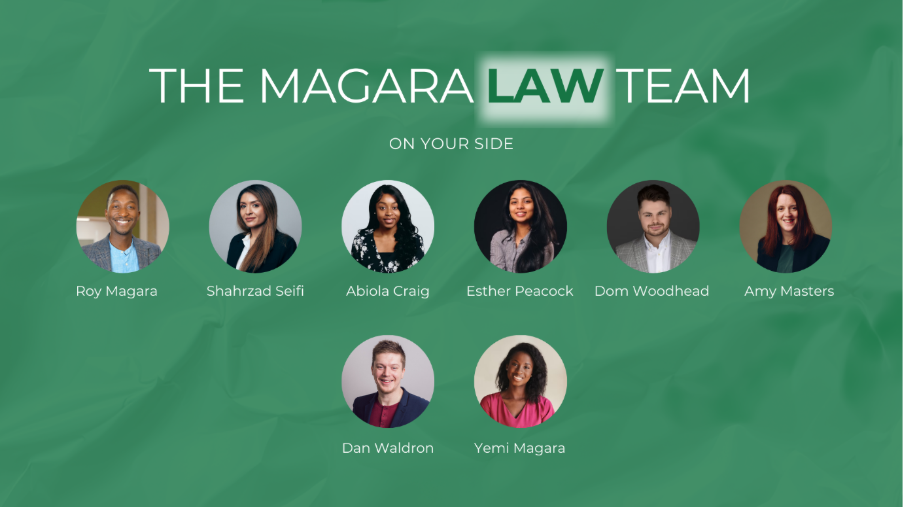
We advise both employers and individuals on bullying, harassment and settlement risk, especially where confidentiality clauses are being proposed, challenged, or redrafted in light of upcoming reforms.
If you are:
- an employer reviewing settlement templates, NDAs, grievance processes or investigation protocols ahead of 2026-27 changes
- an employee being asked to sign a settlement agreement after bullying/harassment and unsure what you can still say or do
…we can help you take informed, lawful, and practical next steps.
Our specialist employment law team is on standby to support you. Call 01869 325 883 or email hello@magaralaw.co.uk for a confidential discussion.